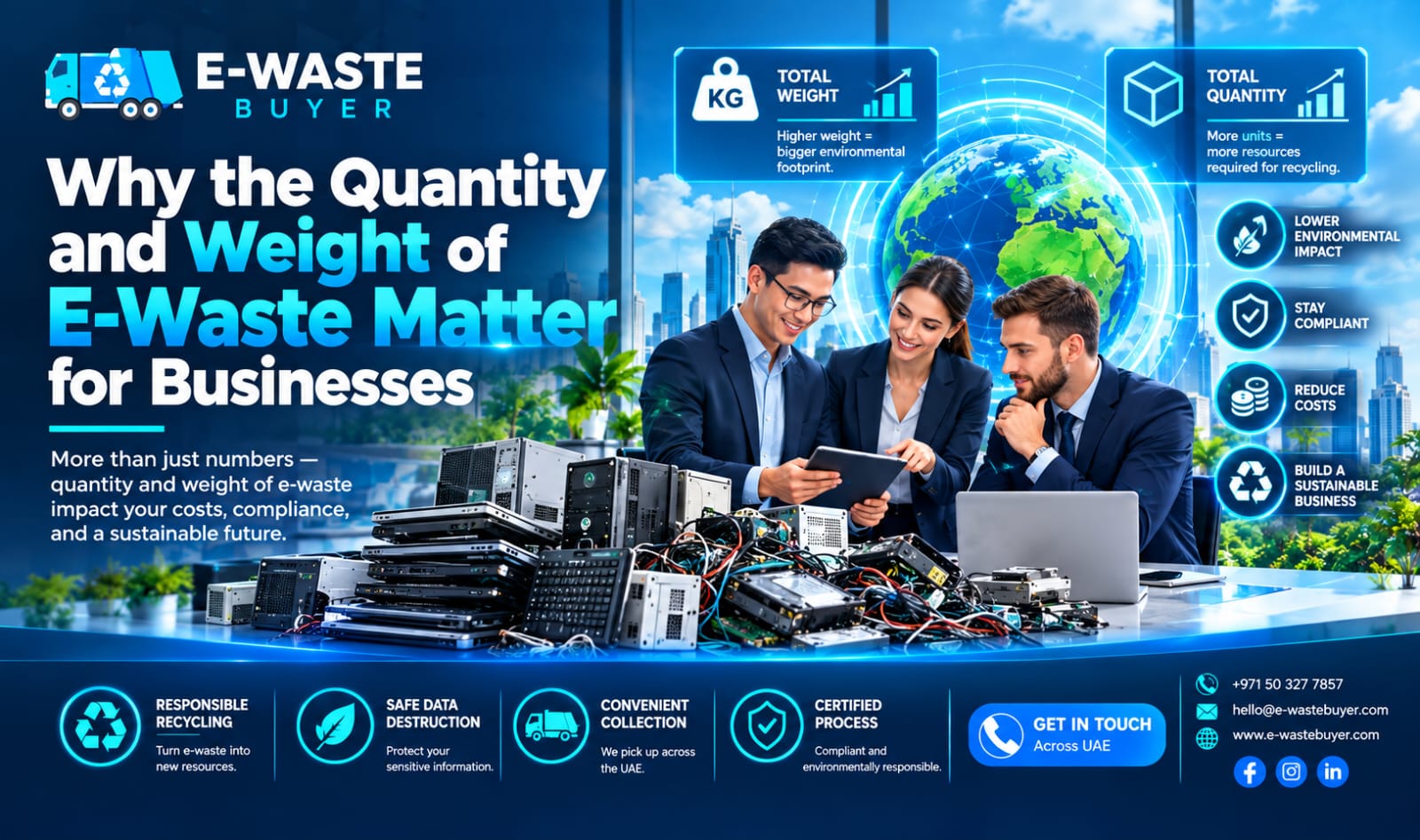
For businesses, disposing of old IT equipment is not simply about getting rid of unwanted electronics. The type, quantity, weight, and condition of e-waste can all affect how equipment is collected, assessed, transported, and processed.
Whether a company has a few obsolete laptops or a warehouse containing hundreds of computers, understanding the quantity and weight of its e-waste can make the disposal process more efficient.
Why Does Quantity Matter?
The number of items being disposed of can influence the logistics involved in an e-waste collection.
For example, a company disposing of 10 laptops may require a very different collection arrangement from a business clearing out 200 desktops, monitors, servers, and networking devices.
Larger quantities may require:
- More collection space
- Additional handling and manpower
- Larger transportation requirements
- More time for sorting and inventory
- Separate categorization of different equipment types
- Detailed asset records
Providing an approximate item count before collection helps an e-waste buyer understand the scale of the requirement and prepare accordingly.
Why Is Weight Important?
Weight is another important factor in e-waste management, particularly when dealing with bulk quantities.
Different types of equipment have significantly different weights. A rack server, UPS system, desktop computer, and laptop may each have very different handling and transportation requirements.
The overall weight can help determine:
- Transportation requirements
- Loading and unloading arrangements
- Handling requirements
- Storage requirements
- Recycling logistics
- Potential material recovery
For larger e-waste collections, knowing the approximate total weight can make planning much easier.
Does Heavier E-Waste Always Have Higher Value?
Not necessarily.
The value of e-waste depends on several factors, not just weight.
These may include:
Equipment type: Servers, networking equipment, laptops, desktops, and other electronics can have different recovery values.
Condition: Working, non-working, damaged, and incomplete equipment may have different recovery potential.
Model and age: Certain models or components may have greater refurbishment or resale potential.
Quantity: Larger quantities can make collection and processing more practical.
Recoverable materials: Some equipment contains materials that can be recovered through appropriate recycling processes.
This is why a proper assessment is generally more useful than estimating value based only on kilograms.
What Information Should Businesses Prepare?
Before contacting an e-waste buyer, businesses can make the process easier by preparing a basic list of their obsolete equipment.
Useful information includes:
- Equipment type
- Brand and model
- Approximate quantity
- Working or non-working condition
- Approximate weight, if available
- Photos of the equipment
- Collection location
- Whether storage devices contain business data
Even if a company does not have exact information, an approximate list or clear photographs can provide a useful starting point.
Bulk E-Waste Requires Better Planning
Large e-waste collections can involve hundreds or even thousands of individual assets. Without proper planning, the process can become difficult to manage.
A structured approach can help businesses organize their obsolete equipment before collection.
A typical process can include:
Inventory → Assessment → Collection → Sorting → Data Destruction → Recovery & Recycling → Documentation
This approach helps ensure that equipment is handled according to its type, condition, and appropriate end-of-life route.
Why Accurate Information Helps E-Waste Buyers
When businesses provide accurate information about their e-waste, an e-waste buyer can better understand the requirement before arranging collection.
For example, knowing that a company has:
- 50 laptops
- 30 desktop computers
- 40 monitors
- 10 printers
- 5 servers
provides much more useful information than simply stating that the company has “IT scrap.”
Photos can also help identify equipment that may require special handling or separate sorting.
Turning E-Waste Into a Managed Recovery Process
For businesses, e-waste management is more than simply removing unwanted electronics from the premises. It is about creating a controlled process for collection, assessment, recovery, and responsible recycling.
Understanding the quantity, weight, type, and condition of obsolete equipment allows businesses to plan collections more efficiently and helps e-waste buyers determine the appropriate handling and recovery process.
E-Waste Collection Across the UAE
E-Waste Buyer helps businesses across the UAE manage obsolete IT equipment and electronic waste through collection, assessment, recovery, and responsible recycling solutions.
If your business has old computers, laptops, servers, monitors, networking equipment, printers, or other electronic assets, you can share the item list, approximate quantity, and photos to help determine the appropriate collection and recycling process.
Have e-waste taking up valuable space? Let’s turn your old electronics into a properly managed recovery opportunity.



Leave a comment